Segmentation
Part of Diagnosing weak email campaigns
Investigating a campaign sent to the wrong segment
Contain a wrong-segment email send, identify affected recipients, assess impact and trace the audience rule that failed.
When a campaign reaches the wrong segment, stop any queued repeat or affected marketing automation that could extend the error. Preserve the sent message and recipient selection. Establish who received it, what they saw, and whether it creates a permission, privacy or offer issue. Campaign performance can wait until recipient impact is understood.
Establish who was affected
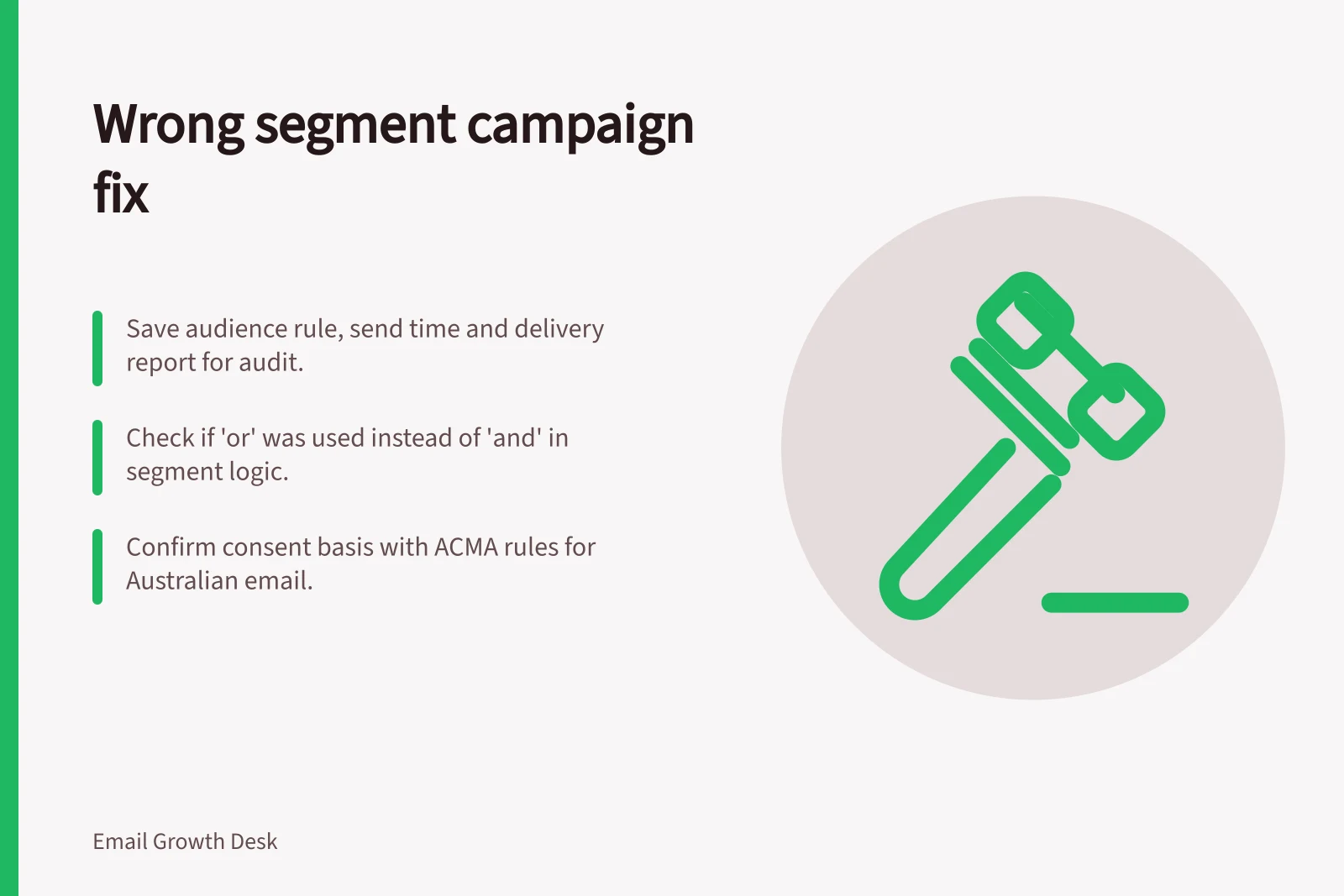
Save the final audience rule, exclusions, send time, message and available delivery report. Compare the intended group with the rule used at send time. Identify unintended recipients and intended recipients who were missed. Use sent records where available; today’s segment count may differ from the group selected when the send ran.
Inspect affected records for the condition that selected them. Check whether an or condition was used where and was intended, a purchase field was late, or an exclusion was omitted. A first-purchase offer reaching recent buyers might arise from stale order data or a missing buyer exclusion. Confirm the fault before choosing a repair.
Assess the message they received
Distinguish an irrelevant but ordinary offer from inaccurate eligibility, a misleading claim or information that should not have been disclosed. Record whether unintended recipients could act on the offer and whether support staff need an agreed response. Involve the organisation’s legal or privacy owner when permission or sensitive information is in doubt.
For Australian commercial email, check the basis for contacting each affected group and consult current ACMA guidance if consent or compliance is uncertain. Route unsubscribe and other requests to stop through the normal process promptly.
Trace the selection fault
Follow the path from source data to final recipients. Check the segment definition, field meaning, refresh time, imports, manual additions and exclusions. Compare any count shown at approval with the count at release and the sent count. A changed count is a clue, not proof of its cause.
Keep the original rule alongside the corrected one. Before using the correction, check it against controlled examples: an eligible contact, an ineligible contact, a contact in two segments and an opted-out contact. Review the final recipient preview and exclusions before the same data route is used again.
Decide whether another message is needed
A follow-up should address a specific recipient issue, such as a material correction or an offer made in error. Another marketing email sent to recover performance could extend the mistake. Assess the follow-up’s content, audience and consent basis separately; the first send does not authorise a second.
Record the affected group, confirmed cause, requests received and correction. Describe the mistaken campaign’s results using its actual audience. Do not compare them as though the planned segment received the message.