List Building
Building a permission-based email list
Build an Australian email list with a clear signup promise, recorded permission, working unsubscribe handling and checks before each send.
Build an email list with a clear invitation, a record of what each person agreed to, and a check that permission still covers each marketing send.
An address captured during an order, enquiry or download is a contact detail; treat the choice to receive marketing as a separate decision.
Define what people are joining
Before adding a form, name the sender, the kinds of emails and the expected frequency. For example: “Get monthly equipment-care advice and upcoming class dates.”
Keep the promise narrow enough to honour. If the emails later change from occasional advice to frequent sales offers, assess whether the original permission covers them.
Establish permission for each address
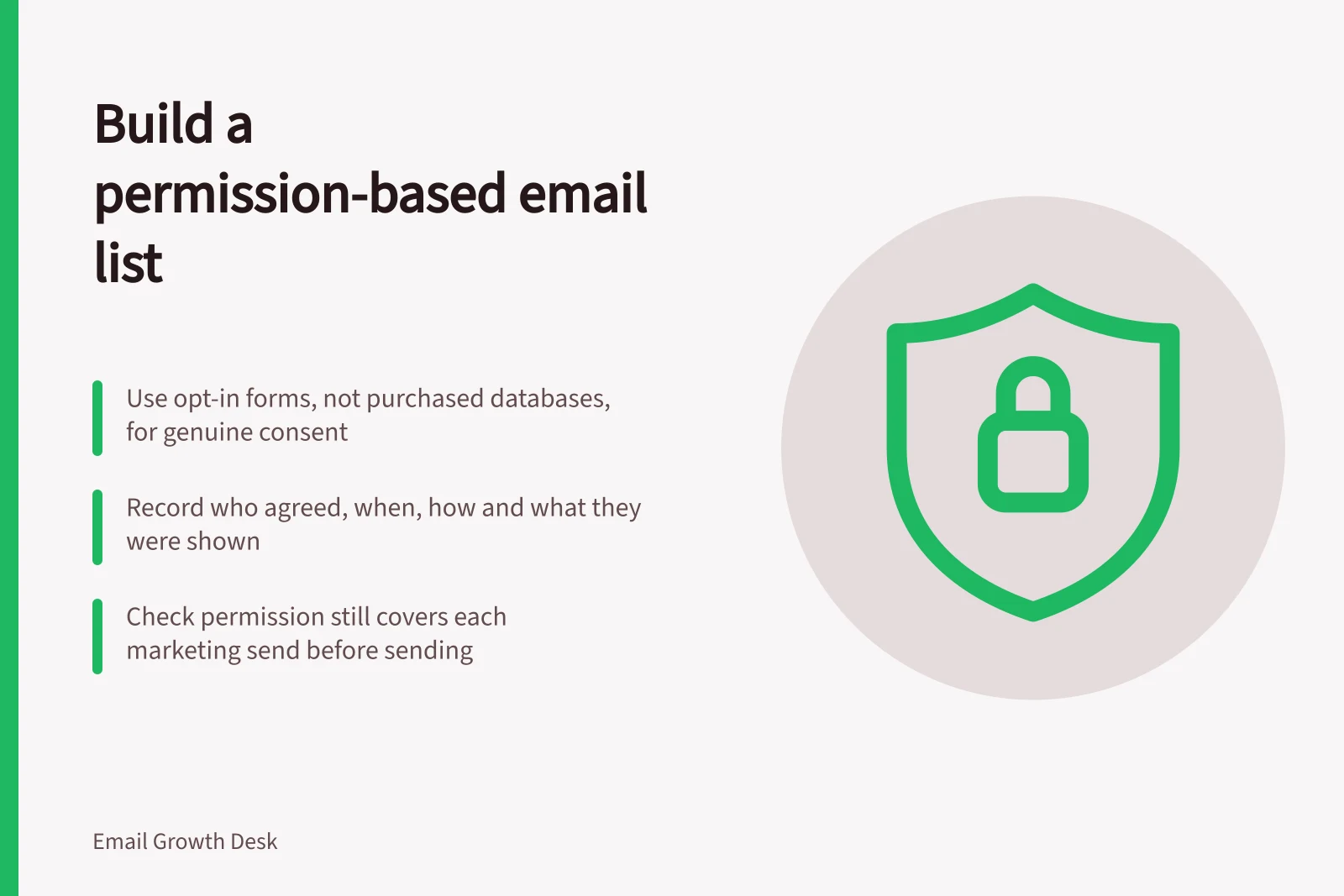
Use genuine permission. Collect addresses through opt-in forms, lead magnets or event sign-ups, not purchased databases. Record who agreed, when, how and what they were shown.
Avoid purchased or scraped addresses. They rarely work well and can put a sender on the wrong side of Australia’s Spam Act 2003, which requires consent, accurate sender identification and a working unsubscribe link on every commercial message.
Where permission is unclear, hold the address out of marketing while it is reviewed. Never add unverified contacts to marketing.
Collect permission where the choice makes sense
A form beside a useful article can offer related updates. A dedicated signup page can explain a broader newsletter. At an event or checkout, separate the information needed for registration or a receipt from any optional choice to receive later marketing.
Ask only for information needed at signup. Label fields and choices clearly, put the marketing promise beside the action, and explain any confirmation step. Double opt-in can require confirmation of an address, but it cannot make unclear signup wording clear after the fact.
Networking events, business chambers and referral partners can introduce potential subscribers, but an introduction is not an opt-in. Ask for explicit permission before adding those contacts to marketing.
Pros and Cons of Double Opt-In vs. Single Opt-In
- Pros of Double Opt-InHigher quality list; confirms genuine interest; reduces spam complaints; aligns with ACMA consent expectations
- Cons of Double Opt-InLower conversion rate; may deter some users; adds friction to signup process
- Pros of Single Opt-InFaster signups; higher initial capture rate; simpler user experience
Make signup forms accessible
Give each field a visible label and group related choices so people understand what they are selecting. Provide clear instructions, validate entries, and tell people when signup succeeds or what needs correcting.
Keep forms simple and short, and avoid time limits where possible so people can complete them at their own pace. Accessible structure and instructions can make signup easier for people using screen readers, speech input or other assistive technology.
Keep a usable permission record
For each signup route, retain the wording or form version, collection point, date and resulting subscription status. If staff collect consent in person, record what was said and how the person responded.
Carry that history across platforms; a current “subscribed” label alone does not show how permission arose.
Map website forms, events, checkout, integrations and manual imports. Check which routes create a marketing subscription and which create only a contact record, then verify each route in the system you use.
Protect the list after signup
Before a commercial send, apply current consent and unsubscribe records, and check that the message fits the permission given. Identify the sender accurately and provide a clear unsubscribe option.
Keep suppression records so an old import or another workflow cannot restore someone who opted out. Where several lists or systems are involved, check that the opt-out reaches every relevant marketing route.
Review the list as it changes
Permission for a particular message does not prove that an address still works or that an old promise still describes the emails.
Review changed content, old collection sources and long gaps before resuming sends. If you cannot explain why an address is eligible for the planned message, hold it until the evidence is resolved.
In this guide
- Comparing signup forms by context and intentCompare embedded, dedicated, pop-up, event and checkout signup choices by the visitor's task, permission clarity and resulting record.
- Explaining what subscribers will receive at signupWrite a clear email signup promise that names the sender, content, timing and next step, and matches what subscribers actually receive.
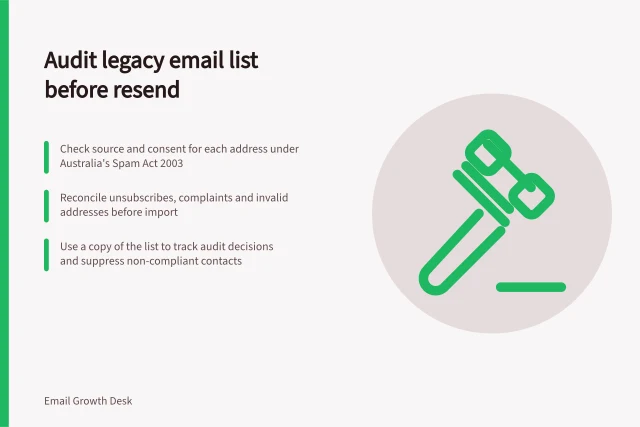
- Cleaning a legacy list before sending againAudit an old email list for permission, source history, unsubscribes and import status before preparing a bounded marketing send.
![Check if subscribers still want emails: Under the Spam Act 2003 (Cth), consent and a working unsubscribe link are mandatory.; Use Mailchimp’s inactive segment only as a starting point—verify permission and signup context.; If no response by [date], pause the newsletter, not unsubscribe, per policy. Asking subscribers whether they still want emails](/covers/asking-subscribers-whether-they-still-want-emails-640.webp?v=5d185c05)