Email Copy
Part of Writing email copy people can use
Replacing vague subject lines with a clear reason to open
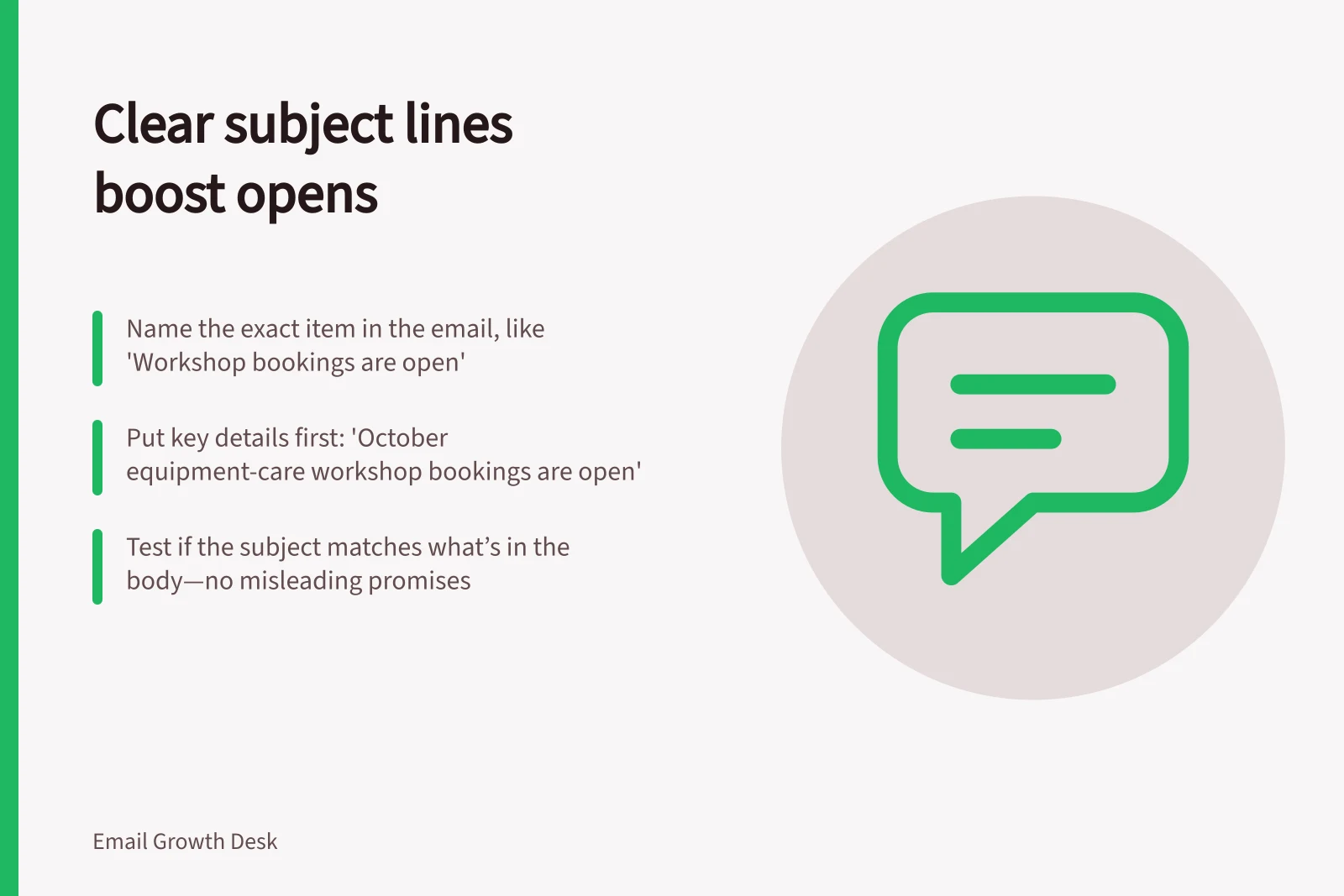
Rewrite vague email subjects by naming the useful item, placing the distinctive detail early and checking the final promise.
Name the useful item the email contains, not a vague promise. Pinpoint the main message, pick a detail that sets it apart, and confirm the body delivers it. Clear wording helps recipients judge relevance; it does not guarantee an open.
Find what the draft leaves out
“Big news”, “Don't miss out” and “An update from us” leave readers guessing. Ask what has changed, what they can learn or what they can do. Write that answer in plain words.
| Vague draft | Clearer subject, if the email supports it | Check first |
|---|---|---|
| Exciting news | Workshop bookings are open | Are bookings open? |
| Your weekly update | This week's equipment-care guide | Is the guide the main item? |
| Last chance | Workshop registration closes Friday | Is that the real deadline, and which time zone applies? |
The examples are hypothetical copy, not tested campaigns.
Put the distinguishing detail early
A first pass might say, “Bookings are open for the October equipment-care workshop.” If the audience already knows the workshop, “October equipment-care workshop bookings are open” may suffice. Inbox views show different amounts of a subject, so put the useful words near the start.
Never replace a vague line with unverified urgency. “Last places” needs a reliable availability check. “Ends tonight” needs an end time accurate for recipients. If a fact may change before delivery, use a stable description or recheck before sending.
Read the From name and subject together. A recognisable sender can add context, but the subject should still identify the message. Preview text can add a second detail; it should not rescue a misleading subject.
Key Facts on Email Subject Line Effectiveness
- Clear subjects improve relevance judgment
- Recipients can better assess if an email is relevant
- Unverified urgency reduces trust
- ‘Last places’ or ‘Ends tonight’ must be fact-checked
Test the wording against the message
Read the subject, then look only at the opening and main content. If it promises dates, can readers find them or a clearly named route to them? If it promises a guide, is that guide the main item? If an offer is limited to a defined group, would the subject mislead anyone receiving it?
A subject need not hold every condition. Put material qualifications close to the relevant offer in the body, and keep the subject truthful on its own because some inbox views show little or no preview text. Review the final audience and final copy after any offer changes.