Email Copy
Part of Writing email copy people can use
Choosing one primary action for a campaign email
Choose which action a campaign email should emphasise, resolve competing requests and give readers enough context to act.
When an email could ask readers to do several things, choose the action that best serves its purpose and the recipient's immediate task. Make that route clear. Keep other useful links in a supporting role, or send separate messages when they ask for unrelated decisions.
Decide what the email is for
Name the decision a suitable reader can make after reading. A workshop invitation might help someone choose a session; a guide email might help them find care instructions.
An important service update may chiefly need to explain a change, with a contact route available if needed. None requires a promotional button merely because the template has one.
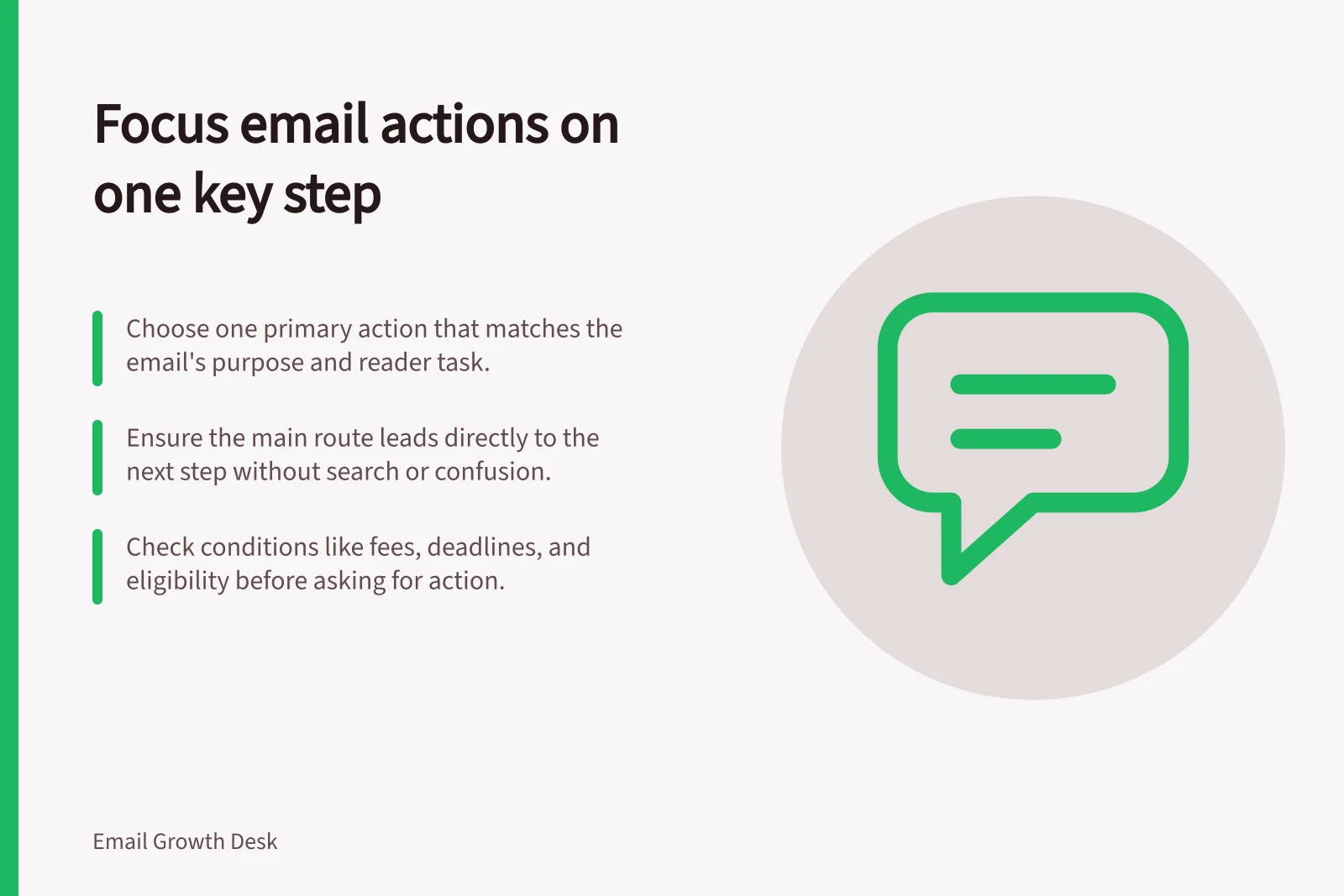
Before settling on the main action, check four things:
- Reader task:What can the recipient reasonably do next?
- Destination:Does the route lead to that step without a search for the promised item?
- Conditions:Does the reader know any material fee, deadline or eligibility rule before acting?
- Wording:Does the action describe the next step rather than promise a completed outcome?
This is an editorial decision sequence, not a claim that one button arrangement performs best for every campaign.
Key questions to decide the primary action in a campaign email
- Reader taskWhat can the recipient reasonably do next?
- DestinationDoes the route lead to that step without a search for the promised item?
- ConditionsDoes the reader know any material fee, deadline or eligibility rule before acting?
- WordingDoes the action describe the next step rather than promise a completed outcome?
Resolve actions that compete
Suppose a hypothetical email announces a workshop and includes a new product guide. If its purpose is to invite bookings, explain the workshop and make the booking route primary; the guide may support that decision later. If the guide is the reason for sending, lead with it instead.
Ask whether both actions serve the same audience and moment. “View dates” followed by “Book a place” can form a sequence, while “Book a place” and “Buy unrelated equipment” ask for separate decisions. When the second item needs its own explanation, audience or deadline, consider another email.
A secondary link can still answer a practical question, lead to terms or offer help. Give it a name that reflects its destination and place it near the question it answers. The aim is a clear priority, not the removal of every other route.
Resolving competing actions in a campaign email
- Identify the primary purposeDetermine whether the email aims to drive workshop bookings or promote a product guide.
- Assess audience and timing alignmentAsk if both actions serve the same audience and moment. If not, consider separate emails.
- Prioritise the main actionMake the most relevant action the primary CTA; secondary links should support, not compete.
- Use clear, descriptive link textLabel secondary links accurately (e.g., 'View terms', 'Contact support') and place them near related content.
Give readers enough to decide
Do not ask someone to book before explaining who the event suits and what committing involves. Put material qualifications near the invitation.
If the action opens a session list, “View workshop dates” is more accurate than “Your place is confirmed”. If sign-in is required at the destination, check whether the copy sets the right expectation.
Read the action alongside the surrounding text and intended destination; the reader should be able to predict what follows. Checking the link in a received test email is a useful pre-send step, but no campaign link or destination was tested for this article.