Campaign Operations
Part of Email campaign calendars and frequency
Choosing when to skip a planned newsletter
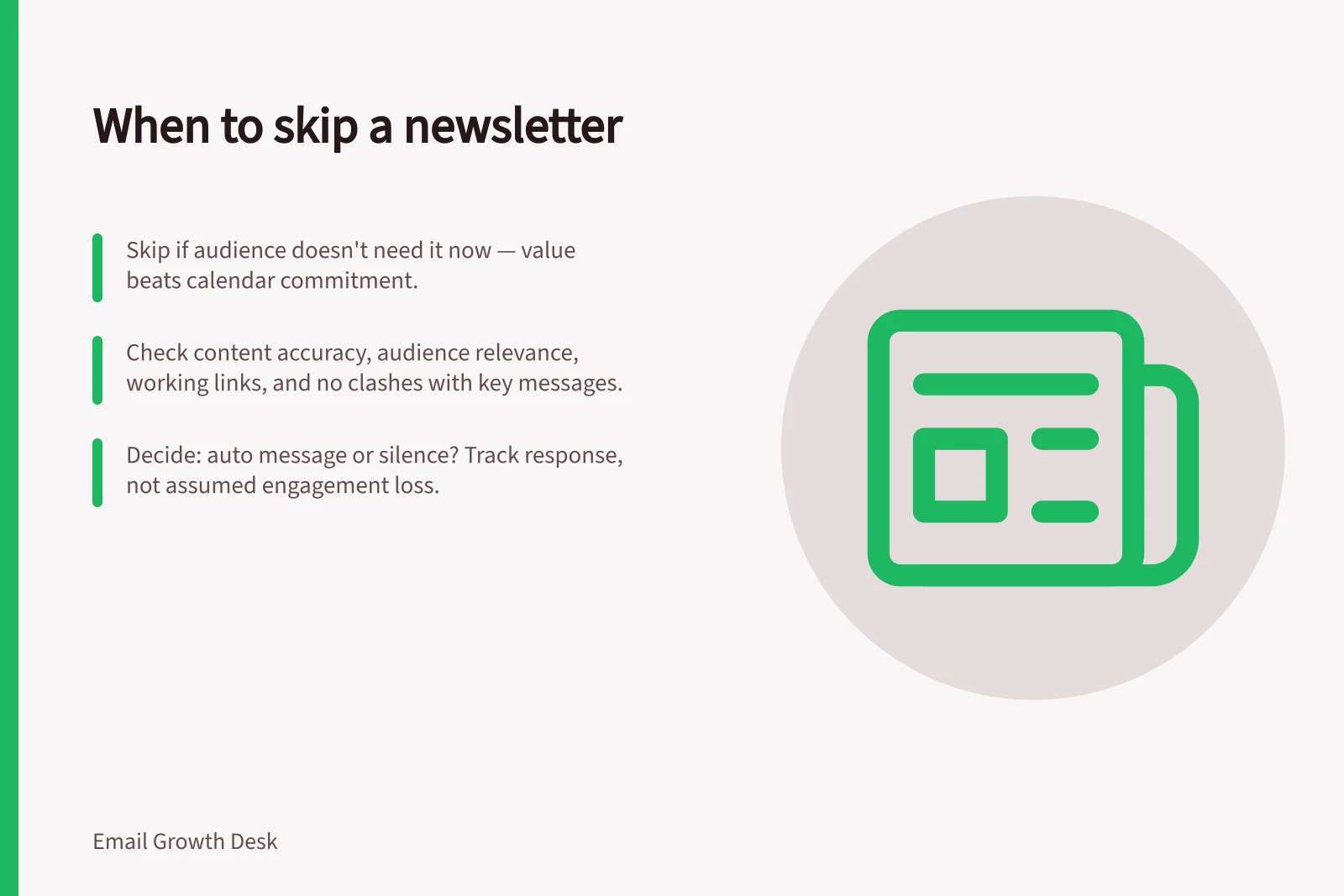
Skip a planned newsletter when the team cannot explain why its audience needs it now.
Skip a planned newsletter when the team cannot explain why its audience needs it now. A calendar commitment does not create customer value. Make the decision deliberately and record the next opportunity to communicate.
Check four conditions: content is accurate and useful; audience is permitted and relevant; the promised destination works; timing does not collide with more important messages. A product out of stock, a stale guide or an unresolved service incident may warrant revision or delay.
If skipping, decide whether an automated message fills a real gap or whether silence is better. Tell internal stakeholders which announcement moved and who owns its new date. Monitor the audience's later response rather than assuming a missed slot harms engagement.
Automated message vs. silence after skipping a newsletter
- Pros of sending an automated message
- Fills communication gap, maintains engagement rhythm, sets expectations
- Cons of sending an automated message
- May mislead if content is not ready; risks undermining trust if overused
- Pros of silence
- Avoids misinformation; signals intentional curation; preserves audience trust
- Cons of silence
- May be interpreted as inactivity; could reduce perceived brand relevance